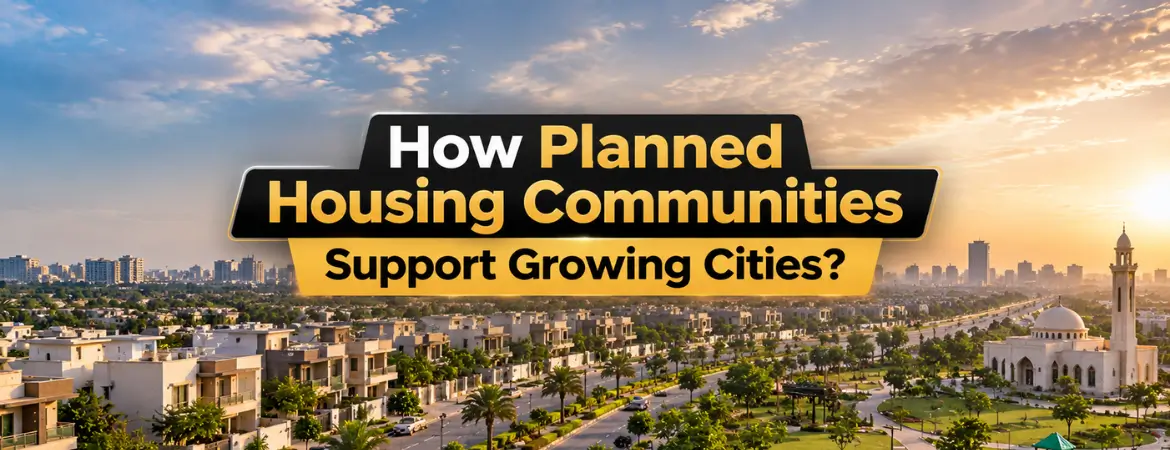
Lahore is growing, and so are the expectations of people who call it home. As new businesses emerge, roads expand, and more families look for places to settle, the demand for well-organized residential communities continues to grow. But building more houses alone is not enough to make a city more livable.
Think about two neighborhoods. In one, residents struggle with narrow streets, limited parking, inadequate drainage, and a lack of nearby recreational spaces. In the other, roads, residential blocks, parks, security arrangements, and community facilities have been considered as part of the development plan.
Both neighborhoods provide places to live, but the everyday experience can be very different.
This is where planned housing communities become important. They help growing cities accommodate residential demand while creating more organized, accessible, and practical environments for families.
At Eastern Housing, we believe residential development should go beyond offering land. A housing community should provide an environment where families can plan their future with greater confidence and enjoy the benefits of organized infrastructure.
Why Growing Cities Need Better Residential Planning?
As cities expand, residential demand spreads beyond established urban neighborhoods. New housing areas emerge, commercial activities move outward, and road networks begin connecting previously less-developed locations.
Lahore is a good example of this transformation. Its expanding residential landscape includes communities located around major routes such as Lahore Ring Road, GT Road, and other important transport corridors.
However, urban expansion without proper planning can create long-term challenges.
When residential development moves faster than infrastructure, residents may face difficulties related to accessibility, traffic, drainage, utilities, and community facilities.
Planned housing communities can help address these concerns by organizing residential development around a defined layout and infrastructure framework.
Instead of treating roads, parks, commercial areas, and utilities as separate additions, a well-planned community considers how these elements should work together.
For homebuyers, this means looking beyond the plot and evaluating the entire neighborhood.
A Home is More Than Four Walls
When purchasing a residential plot, buyers naturally focus on location, price, and plot size. However, the surrounding environment can influence their daily lives just as much as the house they eventually build.
Imagine buying a beautiful home but having to travel long distances for basic shopping, recreational activities, or other everyday needs.
Now imagine living in a community where residential streets, parks, commercial facilities, and important access routes have been considered during planning.
The difference is not simply convenience. It can influence how families spend their time, interact with neighbors, and experience their surroundings.
This is why modern homebuyers increasingly need to evaluate the community alongside the property itself.
A good residential decision is not only about where you build your house, but also about the environment in which you plan to live.
How Planned Housing Communities Improve Urban Living?
Planned housing communities can support growing cities in several practical ways. Their contribution extends beyond residential construction to include infrastructure, accessibility, recreational opportunities, and the organization of everyday activities.
1. Organized Roads and Better Accessibility
Road infrastructure is one of the foundations of a functional residential community.
Well-organized roads, appropriate street widths, and clearly defined access routes can improve movement within a neighborhood.
For residents, this can make everyday activities more convenient, whether they are commuting to work, taking children to school, or accessing nearby commercial areas.
A planned community also considers how its internal road network connects with the surrounding city.
This becomes particularly important in expanding urban areas where connectivity can influence both residential convenience and long-term development.
2. Parks and Open Spaces for Families
Growing cities need more than buildings and roads. They also need spaces where people can relax, exercise, and spend time outdoors.
Parks, landscaped areas, walking spaces, and recreational facilities can improve the residential experience by providing opportunities for physical activity and community interaction.
For families with children, access to outdoor spaces can be especially valuable.
A neighborhood park may become a place where children play, parents walk in the evening, and neighbors get to know one another.
These experiences help turn a residential development into a community.
3. Better Organization of Essential Facilities
A well-planned housing community considers how residents will access everyday facilities.
Mosques, schools, commercial markets, recreational areas, and other community services can play an important role in residential convenience.
When these facilities are considered during development, communities can become more practical for daily living.
However, buyers should distinguish between amenities that are already operational and those planned for future development.
This helps them form realistic expectations about the residential environment.
4. Infrastructure That Supports Future Development
Residential planning should consider not only present requirements but also the needs of a growing population.
Road networks, electricity distribution, water systems, drainage, and other essential infrastructure can influence how effectively a neighborhood accommodates additional homes and residents.
Planning these systems early can reduce some of the difficulties associated with uncoordinated development.
For buyers, visible infrastructure can also provide a clearer understanding of a project’s progress and practical readiness.
Why Location and Connectivity Matter in Lahore?
A housing society can have attractive internal features, but its connection to the wider city remains equally important.
Lahore’s residential growth has increased interest in communities with access to major transportation routes and established urban destinations.
For many families, location is about more than distance on a map.
It is about how conveniently they can reach workplaces, educational institutions, healthcare facilities, markets, and family members.
A residential community near a major road may provide practical access advantages, although actual travel times depend on traffic conditions and the specific destination.
This is one reason connectivity should be considered alongside infrastructure when evaluating a housing society.
A well-planned residential community should function as part of the city rather than as an isolated development.
Why Existing Development Matters to Homebuyers?
A master plan can help buyers understand a developer’s vision, but visible development provides another important perspective.
When roads, houses, parks, and community facilities already exist, buyers can better evaluate the environment in which they may eventually live.
They can observe how the neighborhood is developing, whether families are already residing there, and how accessible the surrounding facilities are.
This is particularly relevant for buyers planning to construct their homes in the near future.
Rather than relying entirely on future expectations, they can assess the actual site conditions.
At the same time, development status should never replace proper due diligence. Buyers should independently verify approvals, ownership documentation, possession arrangements, and applicable charges before making a commitment.
Eastern Housing Lahore: Supporting Planned Residential Growth
At Eastern Housing, our approach to residential development focuses on creating organized communities where infrastructure, accessibility, and residential requirements are considered together.
Eastern Housing Lahore is located near Quaid-e-Azam Interchange on Lahore Ring Road, providing connectivity to important routes and destinations across the city.
The community includes developed residential blocks, roads, landscaped parks, a mosque, outdoor recreational facilities, and security infrastructure.
Baber and Mughal Blocks are developed, and according to our published project information, more than 300 families are already living in Eastern Housing Lahore, with additional houses under construction.
These features reflect an important aspect of planned residential development: creating an environment that buyers can evaluate through existing infrastructure and community activity.
For people searching for on-ground plots for sale in Lahore, Eastern Housing Lahore offers 3 and 5 Marla residential plot options within the community.
Our objective is to provide residential opportunities that combine practical plot sizes with access to planned infrastructure and community facilities.
Buyers are encouraged to visit the project, inspect the available plots, and verify the relevant property details before making their decision.
Why 3 and 5 Marla Residential Plots Matter in Growing Cities?
As urban populations increase, housing requirements become more diverse.
Not every family needs a large residential plot, and not every buyer has the same construction budget.
This is why smaller residential plot categories can play an important role in urban housing development.
3 Marla Residential Plots for Compact Living
A 3 Marla residential plot can be a practical option for buyers who want to construct a compact home while managing their land and construction budgets.
It may appeal to smaller families, first-time property buyers, or individuals planning a home according to specific space requirements.
The actual suitability depends on the plot dimensions, applicable building regulations, and the buyer’s intended house design.
5 Marla Residential Plots for Additional Space
A 5 Marla residential plot provides more space for buyers who need additional flexibility in their home layout.
Depending on the approved construction requirements, this may allow for different room arrangements, parking considerations, and family living needs.
At Eastern Housing Lahore, we offer both 3 and 5 Marla on-ground residential plots so buyers can explore options based on their budgets and future plans.
The important decision is not simply choosing a larger or smaller plot. It is selecting a property that fits the family’s actual requirements.
How Planned Communities Support Local Businesses?
Residential development also influences commercial activity.
As more families settle in an area, demand can increase for grocery stores, pharmacies, educational services, restaurants, maintenance providers, and other everyday businesses.
This creates opportunities for commercial activity around growing residential neighborhoods.
A planned community can support this process by considering suitable commercial areas and accessibility within its overall layout.
However, business growth depends on several factors, including occupancy, purchasing power, location, and market demand.
The broader point is that residential communities are connected to local economic activity.
As neighborhoods become more established, they can contribute to the development of surrounding commercial services and employment opportunities.
Can Planned Housing Communities Reduce Pressure on Growing Cities?
Planned residential development can help distribute housing demand across new urban areas, particularly when those areas are connected to transport networks and supported by essential services.
However, housing societies alone cannot solve every urban challenge.
Traffic congestion, water management, public transportation, environmental protection, and citywide infrastructure require coordination between developers, planning authorities, and public institutions.
Well-planned communities can contribute positively by organizing land use, providing appropriate internal infrastructure, and considering the needs of residents.
Their long-term success also depends on maintenance, responsible management, and integration with the wider city.
For buyers, this means evaluating both the housing society and the surrounding urban environment.
What Should Buyers Look for in a Planned Housing Community?
A housing society may advertise modern planning, attractive facilities, and future development opportunities. However, buyers should evaluate these claims carefully.
Before making a purchase, consider the following factors:
Development status: Which roads, utilities, and community facilities already exist?
Location: How accessible is the community from major roads and important destinations?
Residential activity: Are families already living there, and are houses being constructed?
Amenities: Which facilities are operational, and which remain under development?
Documentation: Are ownership, approval, and transfer details independently verifiable?
Possession: What are the applicable possession conditions and construction requirements?
Long-term management: How will common facilities and infrastructure be maintained?
A physical site visit is particularly useful because it allows buyers to compare the developer’s information with the actual environment.
The goal should be to make an informed decision based on verified details rather than promotional promises.
Better Planning Creates Better Residential Opportunities
The future of growing cities depends not only on how many houses are built but also on how thoughtfully residential areas are developed.
Organized roads, accessible facilities, green spaces, infrastructure, and connectivity can make neighborhoods more practical and appealing for residents.
For homebuyers, these factors are important because a residential plot is not an isolated investment. It is part of a larger community that may influence everyday life for years to come.
At Eastern Housing Lahore, we aim to support this approach through planned residential development, existing community infrastructure, and 3 and 5 Marla on-ground residential plot options.
For buyers who want to explore a developed residential environment in Lahore, visiting Eastern Housing Lahore offers an opportunity to evaluate the community, inspect available plots, and consider the options according to their requirements.
Because a home is not just about the land you purchase. It is also about the community you choose to become part of.
FAQs
What is a planned housing community?
A planned housing community is a residential development designed around an organized layout that considers roads, residential plots, utilities, open spaces, and other community facilities.
How do planned housing societies help growing cities?
They can support organized residential expansion, improve neighborhood accessibility, provide recreational spaces, and help accommodate housing demand when developed and managed responsibly.
Why are on-ground residential plots important for buyers?
On-ground residential plots allow buyers to identify and evaluate the physical location of a plot and its surrounding environment. Buyers should still verify documentation, possession conditions, approvals, and development charges.
Does Eastern Housing Lahore offer 3 and 5 Marla plots?
Yes. Eastern Housing Lahore offers 3 and 5 Marla residential plot options. Buyers can contact the company for current availability, pricing, payment terms, and possession-related information.
Is a developed housing community always better than a developing one?
Not necessarily. Developed communities may suit buyers who prioritize existing infrastructure and visible residential activity, while developing communities may appeal to buyers with longer timelines. The right choice depends on individual requirements and due diligence.
 Skip to content